What Affects the Cost of Tree Removal?
Tree-removal cost depends on the conditions of the job, which is why every tree has to be assessed individually and why we do not publish a price list. Two trees of the same height and diameter can require very different amounts of labor depending on access, condition, rigging, and what sits underneath them. What follows is what we actually look at, what is included in the written estimate, and what to compare between bids.
How we price
Assessed on Site, Quoted in Writing
Every removal is quoted as one written number for the whole job, cleanup included. We do not quote hourly, and we do not quote over the phone, because a phone quote on tree work is a guess dressed up as a price.
1. Request an assessment
A Certified Arborist comes out, walks the property, and reads the tree, the lean, the target zone, and the ground under it. That visit is free and there is no obligation attached to it.
2. Receive a written recommendation and estimate
You get our recommendation and one written number covering the removal, the rigging, the debris, and the cleanup. Anything quoted separately is named on the estimate rather than turning up at the end.
3. Schedule the work and final cleanup
Once you approve the written estimate we schedule the crew, and debris removal and cleanup are part of the job. If something genuinely changes once we open the tree up, we stop and talk to you first.
The factors
What Affects the Cost
No single factor decides the number on its own. These are the conditions an assessment looks at, and they interact.
| Factor | Why it affects the work |
|---|---|
| Tree height | Height sets how much of the work has to happen off the ground and how far material has to be lowered rather than dropped. |
| Trunk diameter | Diameter drives the weight of every piece that comes down and the volume of material to process and haul. |
| Tree condition | A dead or heavily decayed tree is less predictable to climb and rig, because the wood cannot be trusted to hold. Waiting until a hazardous tree is dead usually adds work rather than removing it. |
| Access | Whether equipment can reach the tree at all. A tree a bucket truck can reach is a different job from the same tree behind a fence, up a slope, or between two houses. |
| Proximity to homes and structures | Anything over a house, garage, fence, pool, dock, or outbuilding has to come down in controlled sections rather than being felled. |
| Proximity to utility lines | Service drops and nearby conductors change the method, the clearances, and who has to be contacted before work begins. |
| Climbing and rigging requirements | A climbed and rigged takedown is a fundamentally different operation from a straight fell, with more setup, more crew, and more time. |
| Equipment requirements | Bucket truck, crane, or ground crew only. The equipment a site can physically accommodate changes the approach. |
| Debris removal | How much material the job produces, and whether it can be chipped on site or has to be handled as log-length hardwood. |
| Stump grinding | Quoted separately, by diameter. Deciding at estimate time rather than later matters, because the equipment is already on site. |
| Emergency scheduling | Storm and same-day response means mobilizing a crew outside scheduled work, often at night or in poor conditions. |
Why Tree Size Is Only Part of the Estimate
Height and trunk diameter are the first things anyone notices, and they do matter. A taller tree means more of the work happens off the ground. A thicker trunk means every section that comes down is heavier to control and there is more material to process and haul away.
But size on its own does not tell you what the job takes. Two trees of the same height and diameter can require very different amounts of labor depending on access, condition, rigging, and what is standing underneath them.
A sound tree in an open yard that equipment can reach may come down in a controlled fell with the crew working from the ground. The same tree wedged between two houses, with a service drop overhead and no room for a bucket truck, has to be climbed and dismantled in sections, with every piece lowered on a rope so nothing lands on anything. That is more setup, more crew, and considerably more time, on an identical tree.
Condition changes it again. A decayed or dead tree of the same size is less predictable to climb and less predictable to rig, because you cannot trust the wood to hold, so the plan has to allow for that.
This is why an on-site assessment exists. Someone has to stand under the tree and look at what is actually there.
The short version: size sets the scale of the work. Access, condition, rigging, and what is underneath set how the work has to be done. You need both to price a removal honestly.
What is included in the written estimate
A written estimate from us covers the whole job, not the first half of it. Cleanup is not an add-on and there is no separate haul-off line item waiting at the end.
- Full removal, including sectional dismantling and rigging where needed
- All debris hauled off the property
- Cleanup of the work area, including raking down
- Liability and workers’ compensation coverage on every crew member
- An on-site assessment from a Certified Arborist rather than a salesperson
What we quote separately
- Stump grinding, by diameter
- Crane mobilization, when a crane is genuinely the safest option
- Firewood cutting and stacking, if you want to keep the wood
- Log haul-off for very large diameter hardwood
Related reading
Request a free written estimate
Send photos with your request. Seeing the tree and what is around it tells us far more than a description does.
Answers
Q & A
Why do tree-removal quotes vary so much?
Because the same tree is not the same job everywhere. Height and diameter are the obvious variables, but condition, access, what sits underneath the tree, whether it has to be climbed and rigged, and what equipment can physically reach the site all change how many hours and how many people the work takes. Two quotes on the same tree can differ because the companies are planning genuinely different methods.
What is included in the written estimate?
One number covering the removal itself, the rigging, the debris, and the cleanup. Liability and workers' compensation coverage on every crew member is part of the job, not an extra. Anything quoted separately, such as stump grinding, is named on the estimate rather than turning up at the end.
Is stump grinding separate?
Yes, it is quoted separately, because not everyone wants it. It is worth deciding at estimate time rather than later, since the equipment is already on site while the removal is happening.
How does access affect the job?
Access decides the method. A tree that equipment can reach and that has open ground to fall into can often be felled. A tree that cannot be reached has to be climbed, dismantled in sections, and lowered on ropes, which takes more setup, more crew, and more time. Neither one is the right answer everywhere. It depends on what is actually around the tree.
Why do hazardous trees require more planning?
Because the wood cannot be trusted. Decay, cracks, and root failure make a tree unpredictable to climb and unpredictable to rig, so the plan has to account for pieces behaving differently than sound wood would. That usually means more rigging, more rope, and sometimes a crane rather than a climber.
What should I compare between estimates?
Compare scope before you compare anything else. Does the number include debris removal and cleanup, or does haul-off appear later? Is the stump in or out? Is the method described, or just the price? Then ask every company for a current certificate of insurance naming both general liability and workers' compensation, and confirm who is actually doing the work.
Why does insurance verification matter?
Because if a crew without workers' compensation coverage is injured on your property, or an uninsured crew puts a tree through your roof, that exposure can land on you and your homeowners policy. Ask for the certificate before you book. A legitimate contractor hands it over without hesitation.
Do you charge for an estimate?
No. Estimates are free and written, with no obligation and no pressure. We would rather look at the tree in person than guess from a description, because a sight-unseen quote on tree work is a guess.
Where we work
Same Standards Across the Map
Fourteen counties across North and Central Alabama.
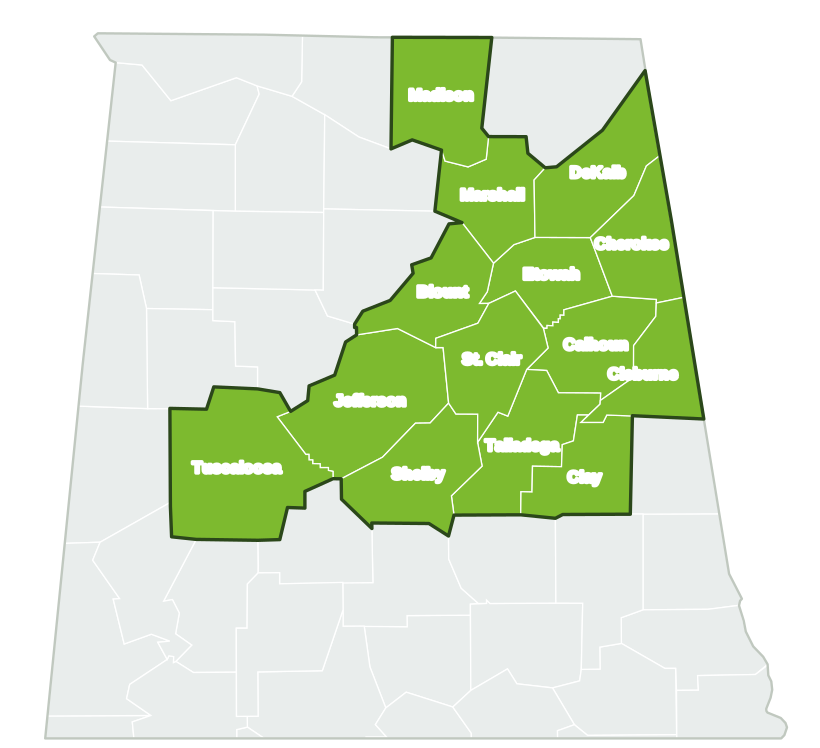
Counties we cover
- Blount County
- Calhoun County
- Cherokee County
- Clay County
- Cleburne County
- DeKalb County
- Etowah County
- Jefferson County
- Madison County
- Marshall County
- Shelby County
- St. Clair County
- Talladega County
- Tuscaloosa County
No travel surcharge anywhere in the shaded area. Send your address with the form and we will confirm coverage.
Find out what your tree actually takes
Free written estimate, no obligation, no pressure.